Australian Time Zones
Real-time clocks across every Australian capital city, updated every second
Next Clock Change
Affecting NSW, VIC, SA, TAS & ACT
Understanding Australian Time Zones
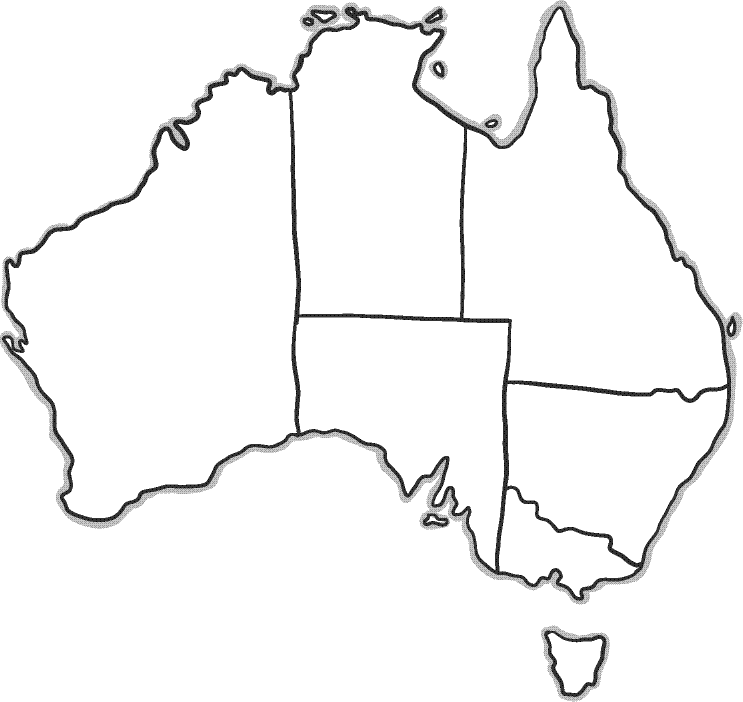
Australia spans three base time zones, with some states observing daylight saving time during summer, creating up to five simultaneous offsets.
Western Standard Time
Western Australia (WA) runs on AWST (UTC+8). Perth does not observe daylight saving. This gives WA a permanent 2-hour gap behind Sydney during standard time, growing to 3 hours in summer.
Central Standard Time
South Australia and the Northern Territory use ACST (UTC+9:30). Only SA observes daylight saving (ACDT, UTC+10:30). The NT's offset of +9:30 makes it unique among non-DST states.
Eastern Standard Time
NSW, VIC, QLD, TAS and ACT share AEST (UTC+10). Except Queensland, all observe daylight saving (AEDT, UTC+11). This creates a 1-hour gap between Brisbane and Sydney in summer.
Daylight Saving in Australia
Daylight saving time in Australia has a long and contested history. First trialled during World War I for energy conservation, it wasn't uniformly adopted across states until the 1970s, and has remained controversial ever since.
Currently, New South Wales, Victoria, South Australia, Tasmania, and the Australian Capital Territory observe daylight saving. Clocks go forward one hour on the first Sunday in October at 2:00 AM, and back on the first Sunday in April at 3:00 AM.
Queensland, Western Australia, and the Northern Territory do not participate. During peak daylight saving periods, Australia can have up to five different UTC offsets operating simultaneously, one of the highest counts of any nation its size.
Lord Howe Island
Home to the world's only UTC+10:30 standard time. During summer, clocks shift just 30 minutes forward to UTC+11, making it the only place on Earth to use a 30-minute DST shift.
The Western Australian Debate
WA has held four referendums on daylight saving (1975, 1984, 1992 and 2009), with voters rejecting it each time. The most common reasons: early sunrise, disruption to farmers, and children walking to school in the dark.
Business & Travel Impact
When eastern states observe daylight saving, the gap between Perth and Sydney grows to 3 hours. Scheduling meetings, booking flights, and coordinating across states becomes considerably more complex during the transition weeks.
Australia & the World
Australia's eastern seaboard overlaps with prime business hours in Asia, making Sydney, Melbourne, and Brisbane particularly well-positioned for Asia-Pacific commerce. During standard time, AEST aligns closely with Japan and South Korea (both UTC+9/UTC+10 range).
Perth's AWST (UTC+8) is identical to Singapore, Hong Kong, Taiwan, and Perth (WA), making Western Australia a natural gateway for trade with Southeast Asia and China. The same time zone covers over 2 billion people across Asia.
At the opposite end of the day, Australia's morning work hours correspond to afternoon and evening in the US and Canada, useful for companies running follow-the-sun support models across the Pacific.
Current Temperatures
Live temperatures across major suburbs in each Australian city, updated hourly.